About Scrapbook
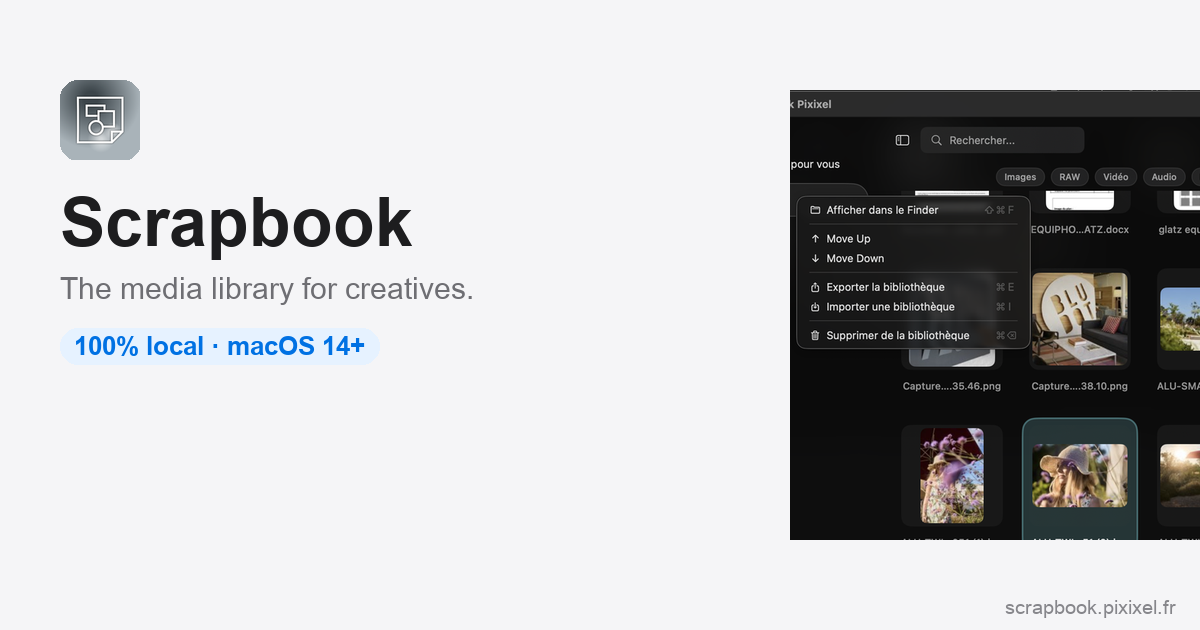
Scrapbook is a native macOS media library built for creative professionals. Developed by Éric Fréour, a French indie developer, the app lets you browse, organize and use 70+ file formats — RAW images, videos, design files, 3D models, documents — from a lightweight, fast, 100% local interface.
Scrapbook is a lightweight alternative to Adobe Bridge: no subscription, no cloud, no required account. A one-time purchase gives unlimited lifetime access on all Macs linked to an Apple ID. A free one-month trial is included.
Available on the Mac App Store. Requires macOS 14.0 Sonoma or later.
By the numbers
Key features (2026)
The major additions in this version focus on three pillars: iView Media Pro succession, 100% local artificial intelligence, and DAM (Digital Asset Management) discipline.
-
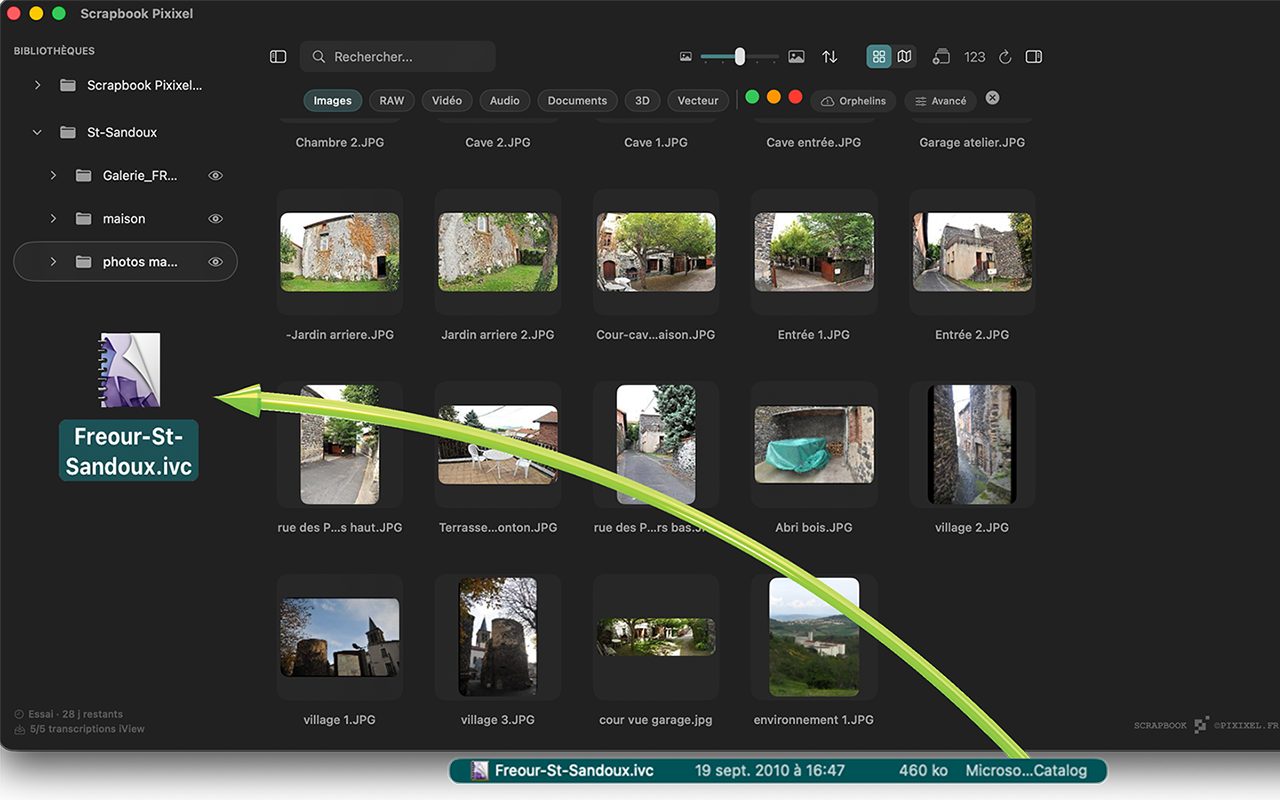
iView Media Pro catalog transcription (.ivc)
Unique market positioning argument. Scrapbook natively reads
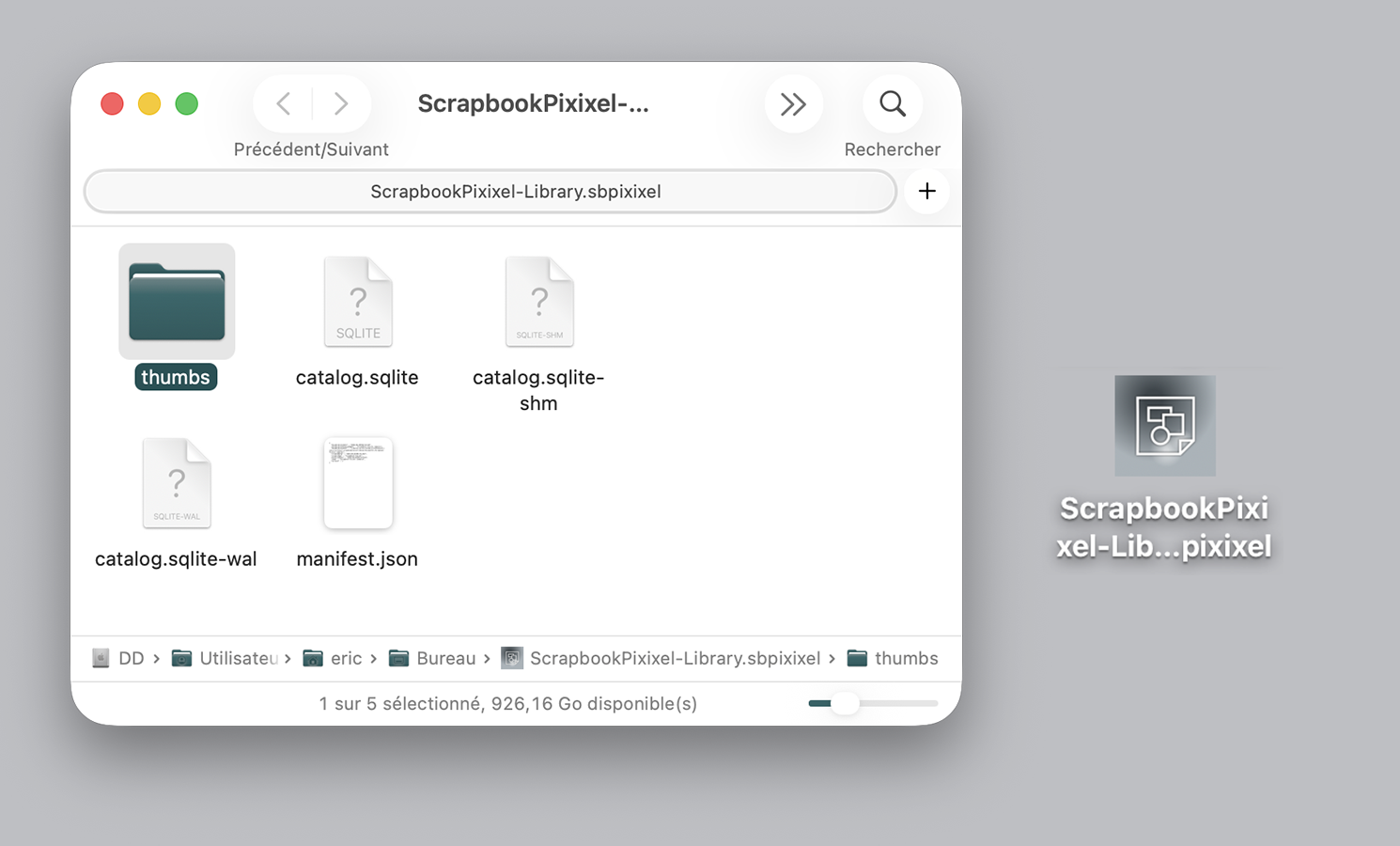
.ivcfiles from iView Media Pro (then Microsoft Expression Media, then Phase One Media Pro, discontinued in 2018) and transcribes them to its.sbpixixelformat. Sets, labels, ratings, keywords, and links to originals are preserved. Lost links remain visible with an "orphan" badge and an integrated Spotlight search. The original.ivcfile is never modified. -
100% local AI indexing
Visual auto-tags (animals, landscapes, objects, scenes), face detection, technical sharpness score, perceptual hash for duplicate detection, FeaturePrint vectors for visual similarity. Everything is computed locally via Apple's Vision.framework — no image, no excerpt leaves the computer. Tags are bilingual (system language + English).
-
Natural language search
Typing "beach sunset dog" simultaneously queries AI auto-tags, IPTC keywords, your metadata edits, and the filename. Multiple concepts can be combined in a single query. No cloud service involved — entirely local.
-
Perceptual hash duplicate detection
Identifies duplicates even when resampled, recompressed, cropped, or slightly modified. Adjustable tolerance threshold. Configurable scope (library, Set, selection). Similarity score displayed for each pair.
-
SHA-256 integrity monitoring
Cryptographic fingerprint computed and compared to detect any silent alteration of files (bit rot, disk corruption, accidental modification). This DAM discipline, formalized by Peter Krogh in The DAM Book, is not implemented by any other Mac cataloger at this level. Read-only on your originals.
-
Interactive GPS map view
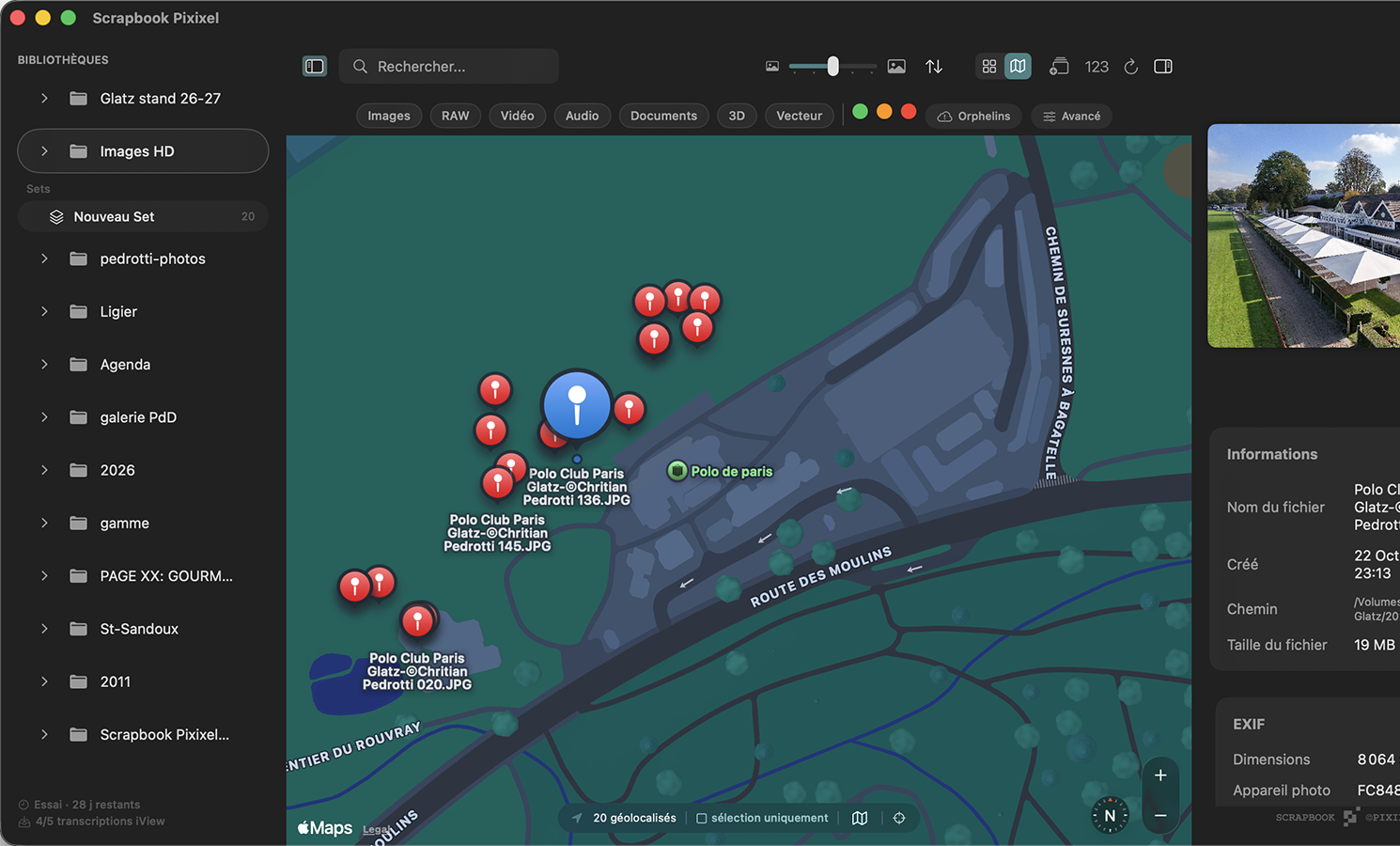
All geotagged photos displayed on a MapKit map with 3 styles (standard, satellite, hybrid). Configurable scope: current selection, active folder, or entire library. Read-only on EXIF coordinates.
-
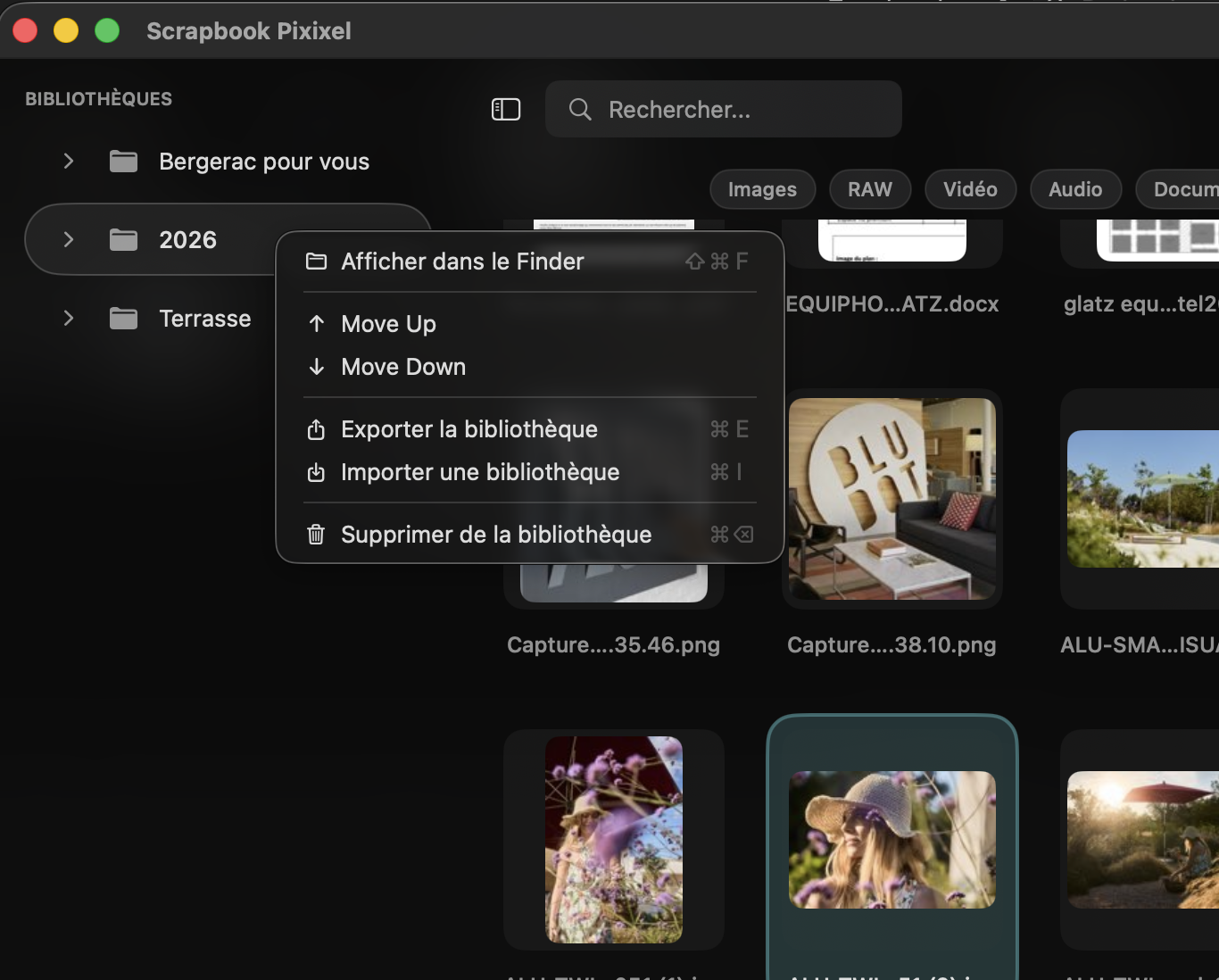
Batch metadata editing, without modifying originals
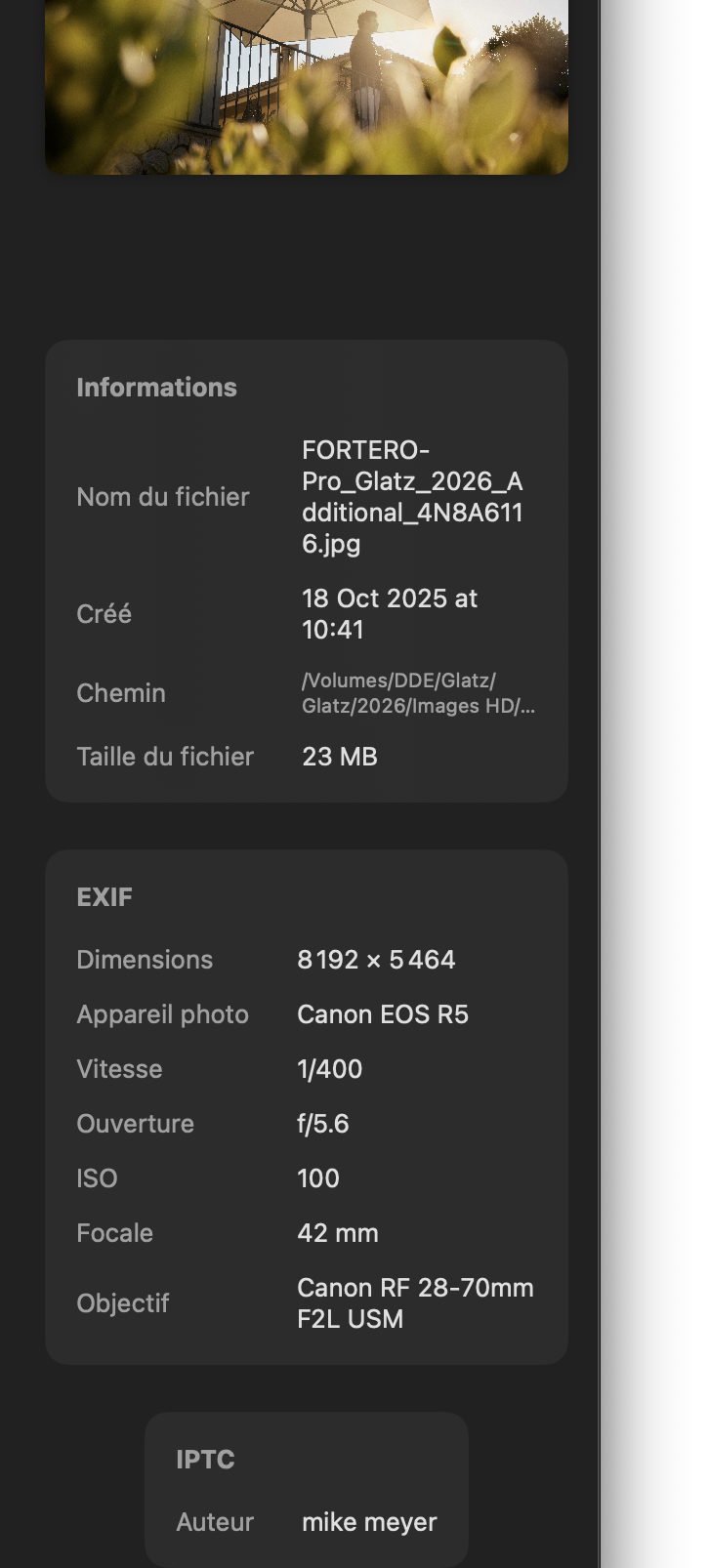
Title, keywords, description, copyright, custom fields (Contract, ClientRef, Project…) editable individually or in batch. Enrichments stored in the local catalog and can be exported as standard XMP sidecars (readable by Lightroom, Capture One, Bridge). No writing to the original file.
-
MP4 video slideshow export (hardware H.264)
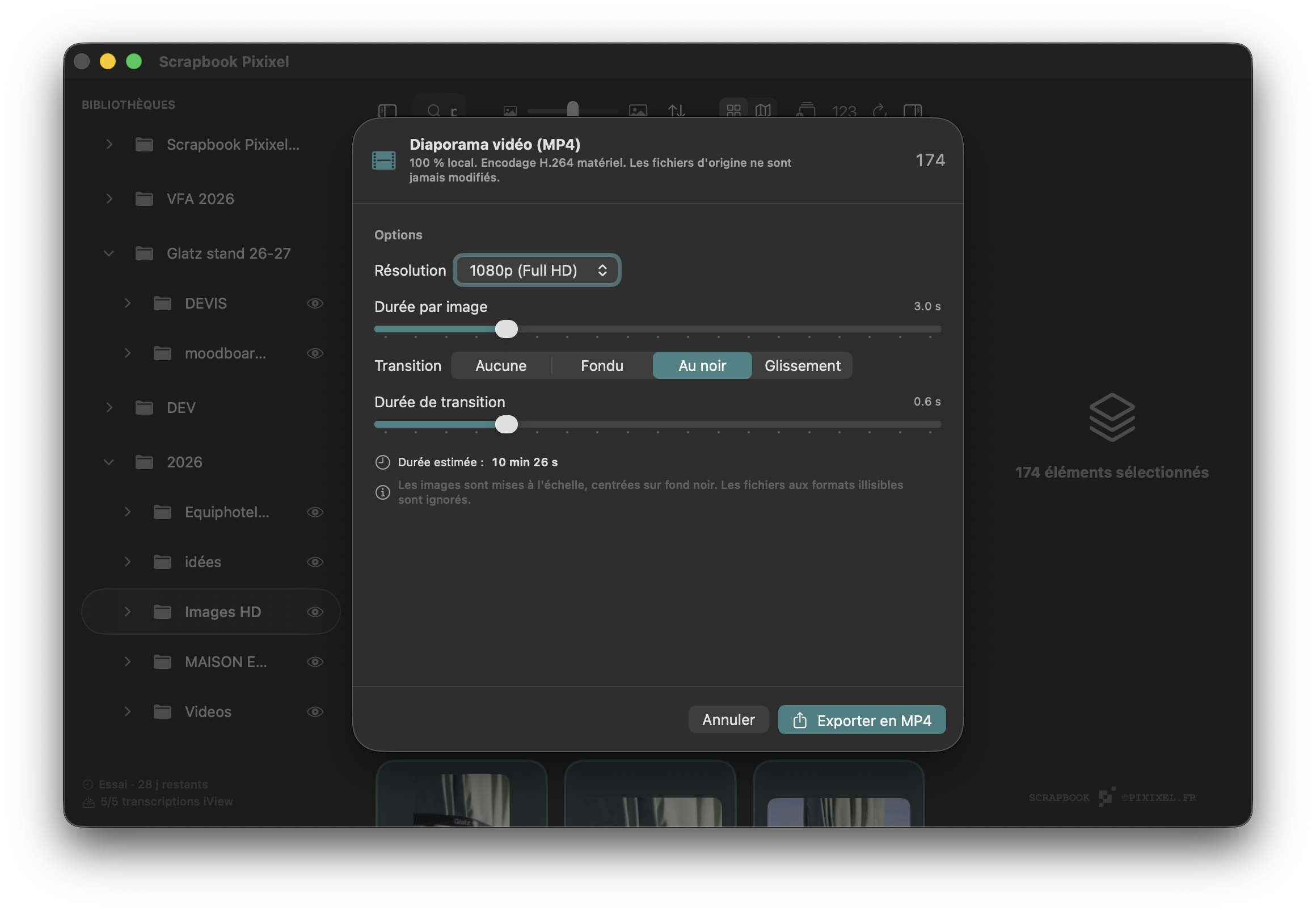
Creates a shareable MP4 from a selection: hardware-accelerated H.264 encoding, customizable transitions (none, fade, fade-to-black), adjustable duration per image. Originals not modified — MP4 created in a user folder.
-
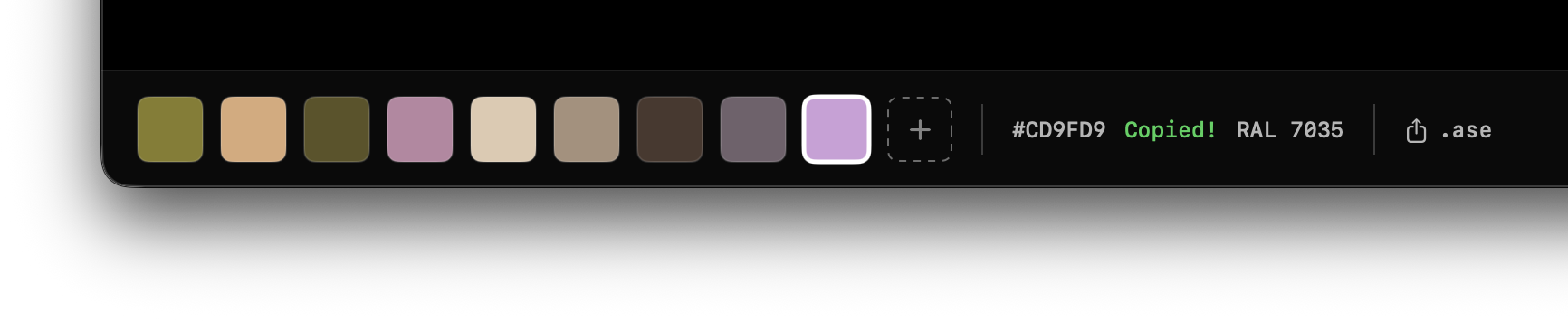
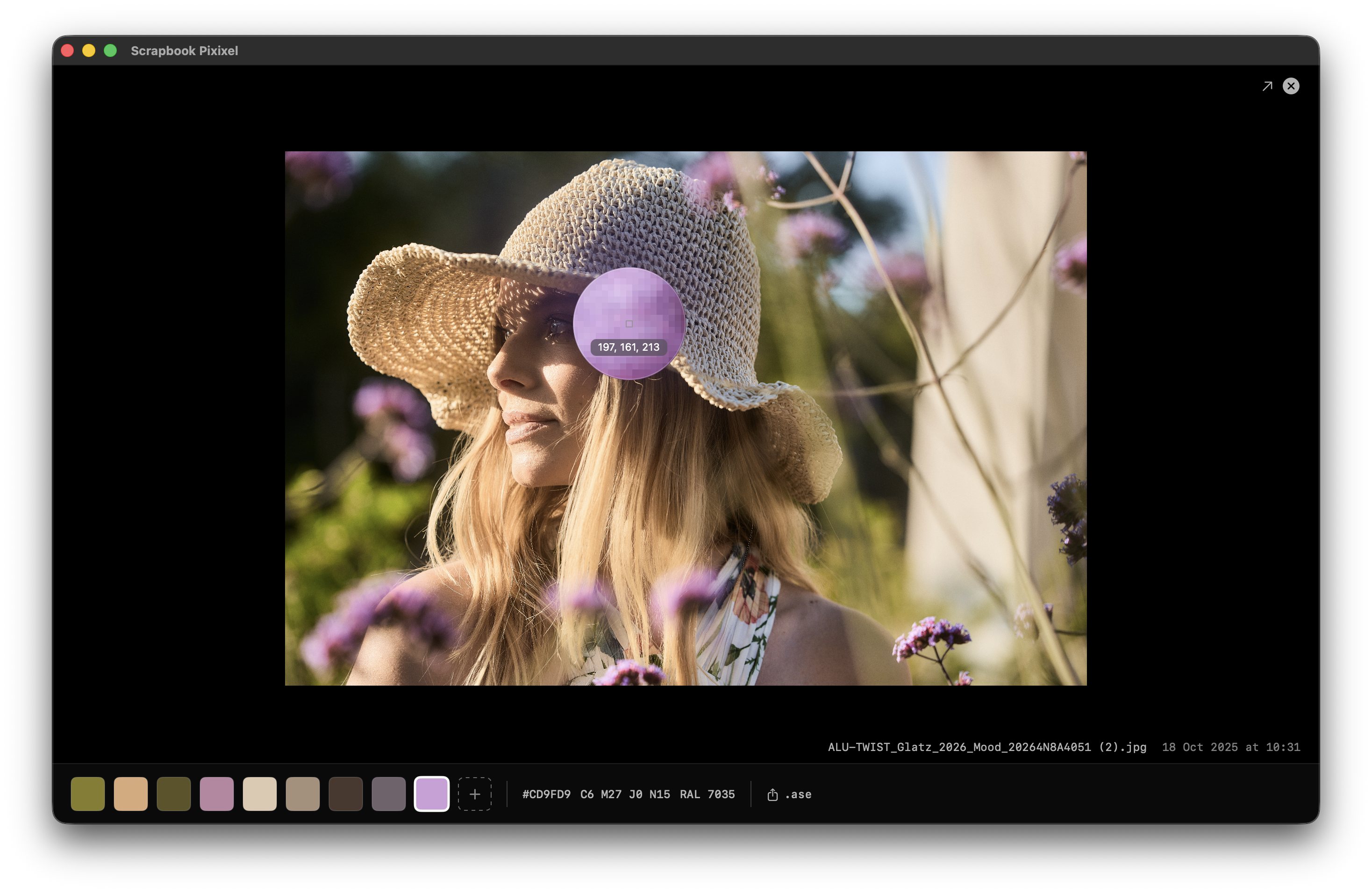
Automatic color palette extraction
K-means++ algorithm in the CIE LAB color space. Extracts 8 dominant colors per image. Export as HEX, CMYK, RAL Classic (213 references), HSL, and Adobe Swatch Exchange (.ase) directly usable in Photoshop and Illustrator. Unique among Mac catalogers.
-
Drag & drop to professional apps
Drag your files directly to InDesign, Photoshop, Illustrator, After Effects, Final Cut Pro, or any macOS application. Multiple selection supported.
-
Absolute privacy: 100% local, no cloud, no account
No data collected, no account, no telemetry, no cookies. The only network connection concerns purchase verification via Apple StoreKit. Works entirely offline. All AI analysis performed via Apple system libraries (Vision.framework, CoreImage, CryptoKit) on the user's hardware.
Screenshots